
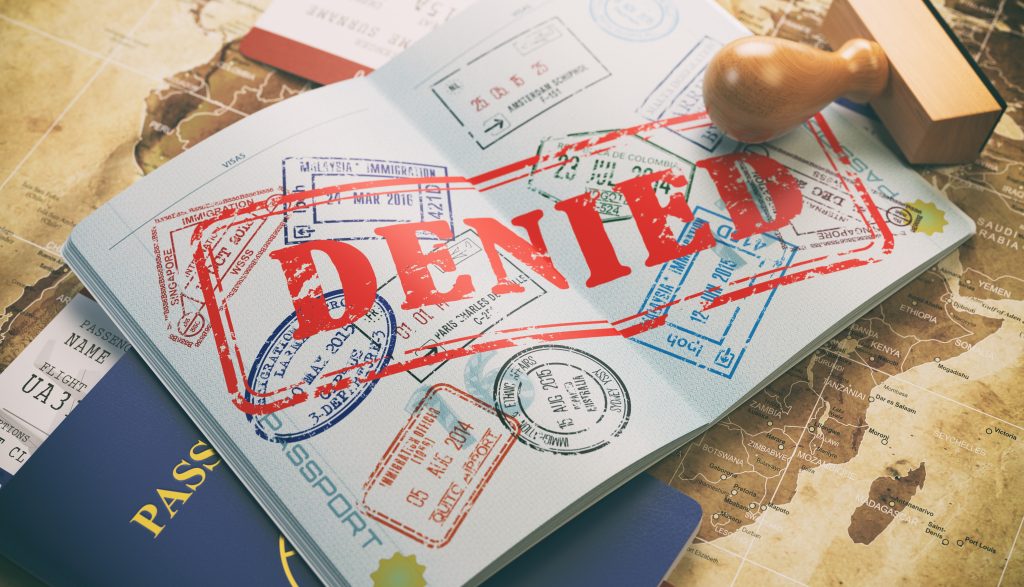
You spent weeks gathering documents. You paid the application fees. You booked the interview slot. Then you opened the email and saw the word “refused.” If you have been through a visa rejection, you know the feeling well. It is not just the money. It is the confusion, the embarrassment, and the very real question: what did I do wrong?
The harder truth is that most rejections are preventable. Consular officers follow a clear framework when reviewing applications, and the same patterns trigger refusals again and again. Once you understand what officers are actually looking for, and what weaknesses they are trained to spot, you can fix your application before it gets to their desk.
This guide breaks down every major visa denial reason, what the law says, and how to build an application strong enough to get approved.
How Common Is Visa Rejection?
Before anything else, know that you are not alone. Visa refusal rates reached 28% in 2024 for visitor visas, affecting thousands of people worldwide. That is more than one in four applicants being turned away.
The Schengen zone saw roughly 11.7 million applications in 2024 with a global refusal rate of 14.8%, meaning about one in seven applications was denied. African applicants are eight times more likely to be refused than Asian applicants.
For student visas, the numbers are even more sobering. The US F-1 student visa denial rate rose to 41% between October 2023 and September 2024, one of the highest rates in a decade. Out of approximately 679,000 applications received, around 279,000 were rejected.
These numbers are not meant to discourage you. They exist to show that visa rejection is systematic, and that fixing the right things can dramatically shift your outcome.
The Most Common Visa Rejection Reasons
Failure to Prove Ties to Your Home Country
This is the number one reason visas get refused, and it shows up across US, UK, Schengen, and Canadian applications. Section 214(b) is the most common reason for US visa rejection, occurring when applicants fail to demonstrate sufficient ties to their home country or overcome the presumption of immigrant intent.
In plain terms, the officer does not believe you will go home. To avoid this, you need to show strong ties to your home country. This can include proof of a stable job, property ownership, a family (spouse, children, or elderly parents you care for), or enrollment in a university.
The more evidence you can stack in one direction, the better. A single payslip is not enough. You want a combination of financial, family, and professional ties that make it obvious you have a life to return to.
Weak or Inconsistent Financial Documentation
Financial insufficiencies account for approximately 20% of visa denials, requiring applicants to prove they can support themselves throughout their stay.
Officers are not just checking your balance. They are looking at your statement over time. Sudden large deposits right before you apply without proof, like a sale deed, gift letter, or bonus letter, suggest borrowed money. Income that does not match bank credits, where payslips say one thing and statements show another, also raises doubts.
Your financial story needs to be consistent, traceable, and enough to cover your entire trip with a buffer. Three to six months of official bank statements is the standard expectation.
Incomplete or Inaccurate Application
A surprising number of applications are refused before the interview even begins. People skip documents they think are optional. The DS-160 form requires perfect accuracy. Starting April 2025, the DS-160 barcode number must exactly match the one used to book the visa interview, with mismatched barcodes preventing entry to the embassy or consulate.
Missing a single document or entering a wrong date can trigger a Section 221(g) denial. A visa denial under section 221(g) means that the consular officer did not have all of the information required to conclude you are eligible to receive a visa. If further documents are required, you will be informed what is needed and given a letter stating your application has been denied and listing what you need to provide.
The good news is that a 221(g) denial is fixable. You typically have one year to submit missing documents before you need to reapply from scratch.
Poor Interview Performance
Poor interview performance contributes to around 20% of refusals, making preparation and consistent answers critical for approval.
Officers are trained to detect hesitation, inconsistency, and vague answers. If your stated travel purpose does not match what is in your documents, or if you cannot answer basic questions about your trip, the officer will flag your case.
Practice answering these core questions out loud before your interview: Why are you traveling? Where will you stay? How will you fund the trip? When are you returning? Your answers should match your documents word for word.
Prior Visa Violations or Refusals
If you have been denied for another visa in the past, it may increase your chances of being denied again. After receiving a denial, it is best to request clarification from the visa officer on the reason for the denial so that you can better prepare in the future.
Most countries keep a digital record of visa refusals. When you apply again, whether for the same visa or a different one, the new embassy may be able to see that your application was previously denied.
Past refusals do not permanently close doors, but they do add scrutiny. You need to directly address what changed since the last denial, not just resubmit the same application.
What Happens When Your Visa Is Rejected?
A visa refusal is not always the end of the road. What you can do next depends on why you were refused and which country issued the denial.
-
- US B1/B2 visas: No formal appeal exists. Reapplication is your only option, and experts recommend waiting three to six months to strengthen your case first.
-
- Schengen visas: Most EU countries allow you to appeal within 15 to 30 days of the refusal.
-
- UK visas: An Administrative Review is available in limited cases. The refusal letter will state your options and deadlines.
Do not rush into a reapplication without fixing the underlying issue. Simply submitting the same paperwork again is unlikely to change the outcome.
Read your refusal letter carefully. Every denial comes with a reason, and that reason is your roadmap for the next application.
How to Avoid Visa Rejection: A Practical Approach
Knowing what causes rejections is useful. Acting on that knowledge before you apply is what actually changes the outcome. Here is what strong applicants do differently.
-
- They start early. Rushed applications have more errors. Give yourself at least six to eight weeks for a major visa application to gather documents, verify details, and address potential weaknesses.
-
- They check their profile before applying. Most people only discover their application is weak after a refusal. Running your application through a proper visa screening process before submission lets you see what officers will see, and fix it first.
-
- They do not guess what is required. Every visa category has its own document checklist. Tourist, student, and work visas all have different standards. Treat every item on the official list as mandatory.
-
- They make their travel purpose crystal clear. A vague itinerary is a red flag. Confirmed hotel bookings, a day-by-day plan, and a return flight show that you have a real, time-limited trip in mind.
-
- They address prior refusals head-on. If you have been rejected before, acknowledge it and explain what has changed. Ignoring it signals dishonesty, which is far worse.
How Vizacheck Helps You Avoid Visa Denial
Most people applying for a US, UK, or Schengen visa are doing it without any real sense of how their application looks from the other side of the desk. They meet the basic checklist and hope for the best. That is not a strategy.
Vizacheck runs AI-powered screening across every signal consular officers evaluate, built for how embassies actually check applications. It does not just review your documents. It models how your full profile reads to an officer and identifies the specific risk factors that could lead to a visa refusal.
If you want to understand your approval odds before you pay fees and sit through an interview, this is the tool built for that.
Screen your application today at Vizacheck before your next submission.
Can a Rejected Visa Affect Future Applications?
Yes, and this is a part of the process many people underestimate. Certain countries, especially those in the Schengen Zone or with close immigration partnerships like the US, UK, Canada, and Australia, may share visa information. A refusal in one country could affect decisions in another if the reasons raise serious concerns like fraud or immigration risk.
This is exactly why it matters to understand how visa screening works before you apply. A refusal that could have been avoided stays on your record. It follows you into every future application. Fixing the problem before submission is always the better outcome.
FAQ: Visa Rejection Questions Answered
Can I reapply immediately after a visa rejection?
Technically yes, but practically no. Experts recommend waiting three to six months to significantly strengthen your application with new compelling circumstances. Reapplying with the same profile signals that you do not understand why you were refused.
Does a visa rejection affect other visa applications?
It can. Shared immigration databases between allied countries mean a refusal in one place may be visible when you apply somewhere else. Being transparent about past refusals and showing what changed is the right approach.
What is the difference between visa rejection and visa refusal?
In practice, people use these terms interchangeably, but some systems distinguish between them. A refusal typically means the officer reviewed your case and made a decision. A rejection can mean your application did not even make it to review due to missing documents or fees. Both require action before reapplying.
What is the best thing to do right after a visa denial?
Read your denial letter, note the exact reason, and do not reapply until you have directly addressed it. If you are unsure what the reason means or how to fix it, use a proper visa screening tool or seek qualified immigration guidance before your next attempt.
Summary
A visa rejection hurts. But it is also data. It tells you exactly what your application was missing and gives you a chance to fix it before it costs you again. The applicants who get approved on the second or third try are not luckier. They understood the process better.
The best time to check your application is before you submit it. Vizacheck gives you that view, screening your profile the way a consular officer would so you walk into the process prepared, not hoping.
Do not let a preventable denial follow you into your next application. Start your screening at Vizacheck today.