Visa denial due to social media is becoming more common than most applicants realize. Visa denial due to social media does not happen because people planned to fail. It happens because something online raised doubt, and that doubt was enough to weaken the entire application.
Many people focus on documents, interview answers, and preparation. They believe that once those are in place, the process is under control. But what shows up online is now part of how visa decisions are made.
A single post, an old comment, or a mismatch between your profile and your application can create questions you are not prepared to answer.
If you are a travel agent or helping someone apply, this is where many cases go wrong. The documents may be correct, but the online presence has not been reviewed properly.
In this article, you will learn how visa denial due to social media happens, the risks to watch for, and what you need to fix before it affects the decision.
Read Also: Visa Social Media Check: Ways to Avoid Visa Denials
How Social Media Leads to Visa Denial
Visa denial due to social media does not happen randomly. It usually follows a pattern where something online does not support the story presented in the application.
Visa officers are trained to look for consistency and credibility. When your online presence does not match what you submitted, it creates doubt. And once doubt is introduced, the application becomes harder to approve.
Here are the main ways social media leads to visa denial:
1. Mismatch Between Profile and Application
If your visa application states one job, school, or location, but your social media shows something different, it raises immediate concern. Even small differences can trigger further review.
2. Posts That Can Be Misunderstood
Not every post is judged the way you intended it. A joke, a caption, or a shared opinion can be interpreted differently by a visa officer who is reviewing your case from a risk perspective.
3. Signals That Conflict With Visa Purpose
Each visa has a clear purpose. If your online activity suggests something else, it can weaken your case. For example, showing long term plans while applying for a short visit can raise questions.
4. Associations and Connections
The groups you join, the pages you follow, and the people you interact with all form part of your online profile. These connections can influence how your intentions are perceived.
5. Old Content That Still Exists
Many applicants forget that older posts are still visible. Something shared years ago can still be reviewed and used to assess behavior over time.
6. Incomplete or Hidden Information
If an applicant does not disclose social media accounts when required, or tries to hide profiles, it can be seen as a lack of transparency.
7. Multiple Small Issues Combined
In many cases, visa denial due to social media is not caused by one major problem. It is the result of several small issues that together create doubt.
This is why understanding how visa denial due to social media happens is important.
It is not about avoiding one mistake. It is about making sure your entire online presence supports your application.
What Visa Officers Look for Before Making a Decision
To fully understand visa denial due to social media, you need to know how visa officers actually review online information.
They are not checking randomly. They are trying to confirm one thing: does this applicant’s online presence support their application or create doubt?
Here are the key areas they focus on:
1. Identity and Profile Details
Visa officers check if your social media profiles match your identity. They look at your name, photos, job, school, and location. These details are compared with what you submitted in your application.
If something does not match, it raises questions.
2. Consistency Across Platforms
They do not rely on one platform alone. They may look across multiple accounts to see if your information is consistent everywhere.
If your LinkedIn says one thing and your Instagram shows another, it weakens your credibility.
3. Content and Activity
Officers review posts, captions, and shared content. They are not just reading what you posted. They are trying to understand your behavior and patterns over time.
This helps them form a picture of your intentions.
4. Comments and Interactions
Your replies, comments, and conversations are also part of the review. Sometimes these reveal more context than your posts.
5. Connections and Associations
They look at who you follow, who engages with you, and the groups you belong to. These connections can influence how your profile is perceived.
6. Alignment With Visa Intent
They check if your online activity matches the purpose of your visa. If your behavior suggests something different, it creates doubt.
7. Overall Credibility
At the end of the review, everything is considered together. The goal is to decide if your application is believable and consistent.
This is why visa denial due to social media happens.
It is not just about one post or one mistake. It is about whether your online presence supports your story or creates questions that cannot be ignored.
Common Mistakes That Lead to Visa Denial Due to Social Media
Visa denial due to social media often comes from mistakes that could have been avoided. Most applicants do not fail because they had a major issue. They fail because they ignored small details that later raised questions.
Here are the most common mistakes that lead to problems:
1. Not Reviewing Social Media Before Applying
Many applicants focus only on documents and interview preparation. They never take time to review their online presence. This leaves too many unknowns in the process.
2. Leaving Outdated or Incorrect Information
Profiles that still show old jobs, schools, or locations can conflict with the current application. Even if the information was correct in the past, it can still create confusion.
3. Ignoring Old Posts and Comments
People often forget what they posted years ago. Old content can still be reviewed and used to assess behavior over time.
4. Making Profiles Public Without Preparation
Some applicants make their accounts public because they were told to, but they do it without checking what becomes visible. This exposes their entire history without control.
5. Deleting Too Much Content Suddenly
Trying to clean everything at once just before the interview can look suspicious. A sudden drop in activity can raise more questions than expected.
6. Overlooking Connections and Groups
The people you follow and the groups you belong to are part of your profile. Many applicants ignore this completely, even though it can influence how their case is seen.
7. Assuming Social Media Does Not Matter
This is the biggest mistake. Some applicants still believe social media is not part of the visa process. That assumption leads to a lack of preparation.
These mistakes are common, and they are avoidable.
But avoiding them requires more than a quick review. It requires a proper way to check what is visible and how it can affect the decision.
How Vizacheck Prevents Visa Denial Due to Social Media
At this point, you already understand how visa denial due to social media happens and why small issues can affect the outcome. The real question now is how to prevent it properly.
This is where Vizacheck comes in.
Vizacheck is built to solve one problem clearly. It helps you identify what can get a visa denied before the embassy ever reviews the case. It does not rely on guesswork or surface level checks. It gives you a structured way to see risks early and fix them before they become a problem.
When you prepare manually, you are only checking what you can see. With Vizacheck, you are checking what actually matters in a visa review.
Here is how it works in practice:
It Scans Social Media the Right Way
Vizacheck reviews your client’s social media activity across platforms. It does not just look at recent posts. It helps you see patterns, interactions, and content that may raise questions during a visa review.
This gives you a clearer picture of how the profile will be perceived.
It Matches Social Media With Application Details
One of the biggest reasons for visa denial due to social media is inconsistency. Vizacheck compares what is online with what is in the application.
It helps you catch:
- differences in job titles
- mismatched education details
- location inconsistencies
- timeline gaps
These are the kinds of issues that often go unnoticed until it is too late.
It Detects Risks You Might Miss
Not every risk is obvious. Some posts look harmless on their own but can raise concern when seen in context. Vizacheck helps you identify these signals early.
This reduces the chances of unexpected questions during the interview.
It Gives You a Clear Review Before Submission
Instead of guessing if everything is fine, you get a clear understanding of what needs attention. You know what to fix, what to leave, and what may need explanation.
This removes uncertainty from the process.
It Helps You Act Before the Embassy Does
This is the most important part.
With Vizacheck, you are not reacting to problems during the interview. You are fixing them before your client gets there.
That changes everything.
If you are serious about avoiding visa denial due to social media, relying on manual checks is not enough.
Vizacheck gives you control over what is being reviewed and how it aligns with the application. It helps you prepare with clarity instead of assumptions.
And when visa decisions are influenced by what is found online, that level of preparation makes a real difference.
See Also: H1B Social Media Vetting: What Applicants Must Know Before Their Visa Interview
Conclusion
Visa denial due to social media is not something that happens by chance. It usually comes from things that were missed, ignored, or not properly reviewed before the application was submitted.
By now, you can see the pattern. It is not just about one post or one mistake. It is about whether your online presence supports your application or creates doubt.
If you leave that to chance, you are taking a risk.
The smarter approach is simple. Review everything early. Align your social media with your application. Fix anything that can raise questions before it reaches the embassy.
That is how you reduce the chances of visa denial due to social media.
And as you have seen, doing this manually is not always enough. It is easy to miss details, and those small details are often what affect the final decision.
See What Can Get a Visa Denied Before the Embassy Does
If you want to avoid visa denial due to social media and prepare your application the right way, watch this:
https://go.veripass.org/vtstrm
This shows you how to review social media and documents together, spot issues early, and fix them before they affect the outcome.
FAQs: Visa Denial Due to Social Media
For many U.S. visa categories, applicants are asked to provide their social media handles, and visa officers may review public profiles as part of the screening process. They use this to confirm that your identity, background, and intentions match what you submitted in your application.
If your social media supports your application, it strengthens your case. But if it shows inconsistencies, raises concerns about your intent, or conflicts with your stated purpose of travel, it can lead to delays, additional questioning, or even denial.
Visa denial can happen for several reasons, and it is often based on whether the officer is convinced that your application is credible and meets the visa requirements.
Here are some of the most common reasons:
Incomplete or incorrect information
Missing details, errors, or inconsistencies in your application can raise doubts.
Weak ties to your home country
If the officer believes you may not return after your visit, your visa can be denied.
Unclear or conflicting purpose of travel
If your reason for traveling is not clear or does not match your documents, it weakens your case.
Insufficient financial proof
Not showing enough funds to support your trip can lead to denial.
Previous immigration issues
Past visa overstays, violations, or denials can affect new applications.
Inconsistent interview answers
If your responses do not align with your application or documents, it creates doubt.
Social media concerns
If your online activity does not match your application or raises questions about your intent, it can influence the decision.
Yes, social media can be checked during a visa application.
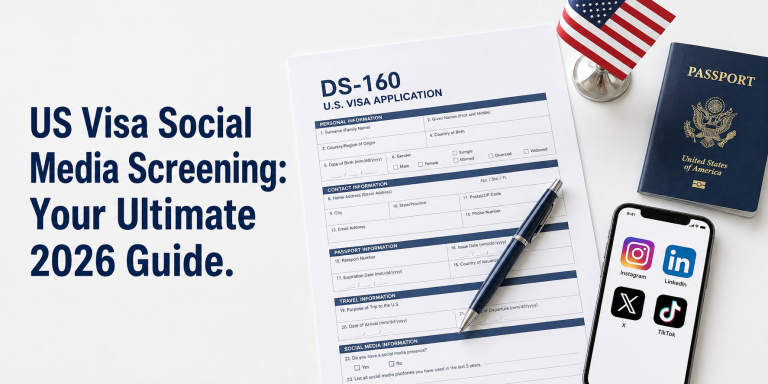
For many U.S. visa categories, applicants are asked to list the social media platforms they have used in the past five years. Visa officers may then review public profiles as part of the screening process.
They look at:
profile details like job, school, and location
posts, comments, and interactions
connections and groups
The goal is to confirm that your online presence matches your application and does not raise concerns about your intent.
Yes, immigration authorities can look at your social media, especially for visa applications.
For U.S. visas, applicants are often required to provide their social media handles, and officers may review publicly available profiles as part of the screening process. This helps them verify your identity and check that your online activity matches the information in your application.
They typically review:
profile details like job, school, and location
posts, comments, and interactions
connections and groups
The goal is to confirm consistency and identify anything that may raise concerns about your intent or eligibility.