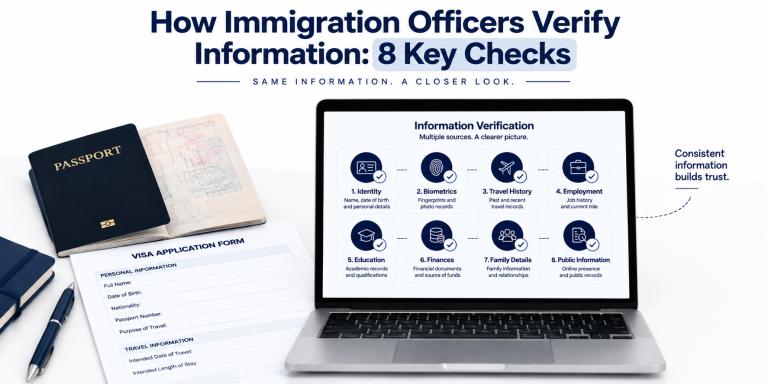
What do visa officers check online? The answer can decide if your visa gets approved or denied, even before you step into the embassy. What do visa officers check online is no longer a simple question. It now includes your social media, your digital footprint, and how your online activity matches your application.
Many applicants believe that once their documents are complete, they are safe. That is no longer true. A single post, a comment, or a mismatch in your online profile can raise questions that affect your entire case.
If you are a travel agent or helping someone apply, this is where most mistakes happen. You prepare the documents but ignore what officers will see online. That gap is where avoidable denials come from.
In this article, you will see exactly what visa officers check online, why it matters, and how to fix issues before they affect the decision.
Read Also: Visa Social Media Check: Ways to Avoid Visa Denials
What Do Visa Officers Check Online
When people ask what do visa officers check online, they often think it is just social media. That is only part of it. Visa officers look at a wider picture of your online presence to confirm if your application is truthful and consistent.
They are not browsing randomly. They are checking specific things to answer one question: Can this applicant be trusted based on what they have submitted?
Here are the main areas they focus on:
1. Social Media Profiles and Activity
Visa officers review public profiles across platforms like Facebook, Instagram, LinkedIn, and others listed in your application. They look at posts, comments, likes, and interactions to understand your behavior and views over time.
They are not just looking for obvious problems. They are looking for patterns. A pattern of posts can say more than a single post.
2. Profile Information and Identity Details
They compare your online profile details with your visa application. This includes your name, job, education, and location.
If your application says one thing and your profile shows another, it creates doubt. Even small differences can lead to more questions.
3. Online Mentions and Search Results
Visa officers may search your name online to see what appears. This can include:
- News mentions
- Public records
- Blog posts or comments
- Tagged content from others
This helps them see what is visible about you outside your own profiles.
4. Associations and Connections
They check who you follow, who follows you, and the groups you are part of. These connections can give insight into your interests, beliefs, and networks.
Even if you do not post much, your associations can still be reviewed.
5. Signs of Misrepresentation
One of the biggest checks is consistency. Officers look for anything that suggests the applicant is not being fully honest.
This can include:
- Different job roles across platforms
- Conflicting travel or location history
- Information that was not disclosed in the application
6. Risk Related Content
They review content that could raise concern, such as:
- Aggressive or threatening posts
- Content that suggests unlawful activity
- Statements that may conflict with the purpose of the visa
This does not always lead to denial, but it can trigger deeper checks.
7. Digital Behavior Over Time
Visa officers do not only look at recent activity. They may review older content to understand long term behavior.
This is why deleting content right before the interview does not always solve the problem.
So when you ask, what do visa officers check online, the real answer is this:
They check everything that helps them verify your story.
If your online presence supports your application, it strengthens your case.
If it creates doubt, it weakens it.
Why These Online Checks Lead to Visa Denials
Now that you understand what do visa officers check online, the next question is why these checks actually lead to denials.
Most applicants do not fail because they submitted the wrong documents. They fail because something online weakens their credibility.
Visa decisions are built on trust. Once that trust is questioned, the application becomes difficult to defend.
Here are the main reasons these online checks lead to denials:
1. Inconsistency Creates Immediate Doubt
When visa officers see differences between your application and your online presence, it becomes a problem. If your form says you work in one role and your profile shows something else, it raises a simple question: which one is true?
Even if the difference is small or outdated, it can lead to deeper checks and delay the decision.
2. Online Content Can Be Misinterpreted
Not every post is taken at face value. A joke, a comment, or a shared post can be interpreted differently by someone reviewing your case. Officers are trained to look for signals, not explanations.
This is why content that seems harmless to you can still affect how your application is viewed.
3. Associations Can Affect Perception
Visa officers do not only look at what you post. They also look at who you are connected to. The groups you join, the pages you follow, and the people you engage with all form part of your online profile.
These associations can shape how your intentions are perceived, even if you have no direct involvement.
4. Past Behavior Is Still Visible
Many applicants assume that old posts do not matter. In reality, older content can still be reviewed. This helps officers understand long term behavior, not just recent activity.
Trying to remove everything at once before the interview can create more suspicion instead of solving the issue.
5. Lack of Transparency Raises Red Flags
If an applicant fails to disclose social media accounts or leaves out important details, it can be seen as misrepresentation. Even inactive accounts are expected to be listed when requested.
Once an officer feels that information is being hidden, the entire application becomes weaker.
6. Online Signals Can Conflict With Visa Intent
Every visa type has a purpose. If online activity suggests something different, it creates a problem. For example, content that suggests long term plans while applying for a temporary visa can raise concerns.
Officers are looking for alignment between intent and behavior.
7. Multiple Small Issues Add Up
In many cases, it is not one major problem that leads to denial. It is several small issues that build over time. A mismatch here, a questionable post there, and an unclear connection elsewhere can combine to create doubt.
This is why understanding what do visa officers check online is not enough.
You also need to understand how those checks are interpreted.
Because once doubt is introduced into the process, the decision becomes harder to control.
How to Prepare for What Visa Officers Check Online
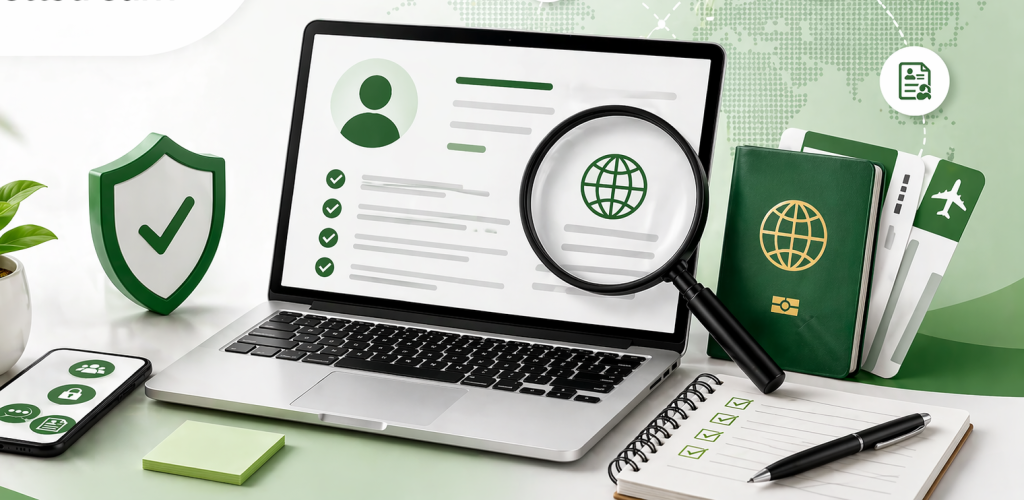
Now that you understand what do visa officers check online and why it leads to denials, the next step is preparation. This is where most applicants and even agents fall short. They wait until the interview is close, and by then, there is little they can fix.
Preparation needs to happen early, and it needs to be structured.
Here is how to handle it properly:
1. Gather All Online Accounts First
Start by listing every social media account your client has used in the last five years. This includes active and inactive accounts. Missing one account can create gaps, and gaps raise questions.
2. Align Profile Information With the Application
Go through each profile and check details like job title, school, and location. These must match what is written in the visa application. If there are differences, update them early so the information is consistent across all platforms.
3. Review Posts and Interactions Carefully
Scan through posts, comments, and replies. Look for anything that can be misunderstood or that does not reflect the current situation. The goal is not to remove everything, but to make sure nothing creates confusion.
4. Check Groups and Followed Pages
Look at the groups your client belongs to and the pages they follow. These connections can influence how the applicant is viewed. If something does not align with the visa purpose, it should be addressed.
5. Search Their Name Online
Do a basic search of your client’s name and review the results. This shows what a visa officer might find outside social media platforms. Anything that appears publicly should support the application, not weaken it.
6. Fix Issues Gradually, Not All at Once
If changes are needed, make them early. Avoid sudden, large changes just before the interview. Gradual updates look natural, while last minute changes can raise suspicion.
7. Prepare for Possible Questions
If there is anything that cannot be changed, prepare clear and honest explanations. If a visa officer brings it up, your client should be able to respond confidently without hesitation.
Why Manual Checks Are Not Enough and Why Vizacheck Changes the Outcome
At this point, you already know what visa officers check online and why that can affect approval. But this is where many agents and applicants still make a costly mistake. They assume that once they have looked through a client’s profile, checked a few posts, and compared a few details, the case is safe.
That is not how visa denials happen.
Most denials linked to online screening do not come from obvious mistakes. They come from things people miss. An old post that no one remembered. A profile detail that no longer matches the application.
A timeline that looks fine on its own but starts to look suspicious when placed beside other public information. A document that says one thing while the client’s digital footprint suggests something else.
This is why manual checks are not enough.
When you review a case manually, you usually see only what stands out at first glance. But visa officers are not reviewing casually. They are looking for patterns, inconsistencies, behavior signals, and anything that weakens the credibility of the application. They are not asking if the profile looks clean. They are asking if the full picture makes sense.
That is where Vizacheck becomes important.
Vizacheck is built to help you screen clients the way embassy level review is starting to happen. It does not just help you glance through social media. It helps you scan social media and documents together so you can catch the kind of red flags that often lead to avoidable denials.
That matters because a visa case does not fall apart only from one bad post. It can also fall apart because the online story and the application story do not match. A job title may differ. A school record may not line up. A location history may raise questions. A pattern of online activity may suggest something the application does not explain clearly.
Vizacheck helps you spot those issues before submission.
Instead of relying on memory, assumptions, or surface level checks, you get a more structured way to review risk. You can identify inconsistencies early, flag weak points in the case, and deal with them before the client gets to the embassy. That gives you something manual checking cannot give you consistently, which is clarity.
For travel agents, this means a stronger process and fewer cases lost to surprises. For applicants, it means a better chance of going into the interview with their documents and online presence aligned.
That is the real value of Vizacheck.
It helps you see what can get a case questioned, delayed, or denied before a visa officer sees it first. And when online screening is already part of the decision process, that kind of visibility can make a real difference.
See Also: Visa Screening Software 2026: Simplify Your Immigration Process
Conclusion
At this point, the question is no longer just what do visa officers check online. The real question is whether you are checking the same things before they do.
Most applicants lose control at this stage. They submit documents, attend interviews, and hope everything goes well. But the decision is already being shaped by what is found online.
If your client’s online presence supports the application, it strengthens the case. If it creates doubt, it weakens everything else, no matter how strong the documents are.
The difference comes down to preparation.
You can either wait for visa officers to find issues, or you can find and fix them before the review happens. One approach leaves you exposed. The other puts you in control.
This is why understanding what do visa officers check online is not enough. You need a clear process to review, compare, and correct everything early.
And that is where using a structured system makes a difference.
See How to Review What Visa Officers Check Online
If you want to reduce the risk of visa denial and handle what visa officers check online properly, watch this:
https://go.veripass.org/vtstrm
This shows you how to review social media and documents together, spot issues early, and fix them before they affect the outcome.